
Projets de recherche
107 résultats
Líder de projeto: Marta Monteiro
Disciplinas:
Sante publiquePalavras chave:
maternal transfermercuryepidemiologybiomarkersgenotoxicityResumo:
 This project aims at assessing the accumulation of Hg (mercury) by woman living in the Aveiro district, and the potential maternal-fetal transfer during pregnancy. In addition to Hg measurements, related oxidative stress, neurotoxicity and DNA damage effects will be evaluated in both mother and baby tissues and blood. Although some epidemiological studies have already related Hg accumulation in several matrices regarding maternal-fetal transfer, only few studies have regarded this approach in Portugal, and none for the Aveiro district (which includes Estarreja). In addition, only few epidemiological studies have focused on genotoxicity to evaluate Hg exposure in humans. Therefore integrating biomarkers of exposure (Hg measures in maternal and fetal matrices) along with biomarkers of effects (e.g. oxidative stress and DNA damage) will improve the knowledge on the historical problem of Hg contamination in Aveiro region, along with the potential action from local authorities if results show concern to human health.
Participantes:
Susana Loureiro, Marta MonteiroLíder de projeto: Manuela Inácio
Disciplinas:
ChimiePalavras chave:
Human healthEcotoxicologyRisk assessmentEnvironmental pollutionEnvironment qualityEnvironmental matricesOrganic pollutantsResumo:
Environmental matrices such as soils, plants, superficial waters and aquatic organisms can be an indicator of the environmental pollution since they could contain high levels of organic pollutants (OPs) influencing the environment quality and consequently human health. OPs are resistant to degradation and can persist for long times in the environment. These compounds can be transported by wind for long distances and can also easily enter the food chain. People are exposed to OPs by ingestion, inhalation and dermal uptake, causing adverse effects in human health due to their carcinogenic and mutagenic nature. The exposure risks to ecosystems and human health will be assessed and monitored on some environmental matrices presents in Estarreja, a very important industrial zone. OPs bioavailability will be assessed and quantified through chemical extractions. Bioacessibility tests will be performed in order to infer about the OPs concentrations that can beincorporated by plants and organisms and eventually reach humans. This study aims to contribute to a better insight on the behaviour of OPs in the ecosystems dynamics and infer about the real human exposure risks. This research work will improve current scientific knowledge about the possible existent contamination by the several OPs, risk assessment and environmental quality of Estarreja area. Assessment of the bioavailability of pollutants and human health risks will be performed through: chemical extractions and also bioaccumulation, bioaccessibility and ecotoxicological studies. It will give us new data about toxicity and bioavailability of present OPs. The main focuses are: 1. Analysis of the contamination levels presents in some environmental matrices (soil, plants, superficial waters and aquatic organisms) in Estarreja area; 2. Evaluation of contaminants bioavailability and bioaccumulation levels by using chemical extraction procedures and by evaluating the accumulation of OPs in plants and aquatic organisms; 3. Quantification of OPs bioaccessibility, namely through physiologically based extraction tests on soil, plants, superficial waters and aquatic organisms; 4. Integration of the obtained results in order toassess risks for human health by describing the contamination levels with OPs and their availability to be up taken by humans; at the end, soil and water quality will be linked to the global ecosystem health. 5. Contribute to define criteria for OPs contamination accepted levels based on potential health risks to humans and define protection strategies for this type of contamination.
Participantes:
Cláudia Coelho, Orquidia Neves,Líder de projeto: Patrícia Santos
Disciplinas:
ChimieSante publiquePalavras chave:
RainwaterDissolved organic contaminantsDissolved inorganic contaminantsSource assessmentEnvironmental riskHuman health riskResumo:
The present project intends to contribute to the knowledge of chemical composition (organic and inorganic) of rainwater in the city of Estarreja, identifying the major pollutants in the area, including tracers of anthropogenic activities. Thus, two distinct sampling locals will be used to evaluate the sources of pollution: one in the industrial area (industrial); and another out of industrial area, and near an agricultural area (industrial background/agricultural). The influence of seasonality (with sampling in two distinct periods: warm and cold seasons) and of air masses trajectories on the chemical composition of rainwater will be also assessed. Moreover, will be evaluated the implications of the presence of contaminants in rainwater to the environment and to the human beings, since rainwater is a way of availability of freshwater. The project involves a multidisciplinary team, with researchers from the Departments of Chemistry and Geosciences at University of Aveiro, with wide experience in assessment of organic and inorganic contamination in environmental matrices, including in rainwater. This project is in the scope of "the OHM International Estarreja, which aims at studying the multiple effects of the industrial activity on the man-environment relationship, taking into account the temporal dimension, marked by changes in industrial practices". Furthermore, the proposed project is within the scope of the priority areas, "Area 2: Public Health", more specifically "Organic Contaminants: agricultural origin/ industrial origin". In addition to organic contaminants the present project will also study the inorganic contaminants from agricultural and industrial origins.
Participantes:
Patrícia Santos, Armando Duarte, Anabela Cachada, Carla PatinhaLíder de projeto: Nuno Durães
Disciplinas:
GeologieHydrologiePalavras chave:
Pore watersOrganic and Inorganic ContaminationAgriculture PracticesResumo:
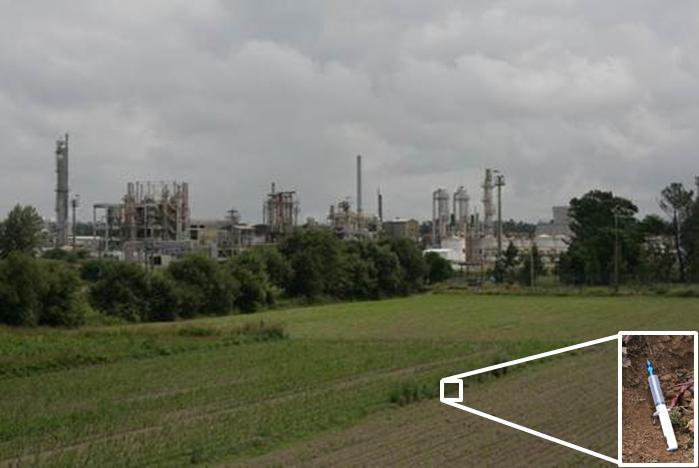 Estarreja has always been a region with extensive farming areas, developing parallel and competing for land with an important industrial pole - the Estarreja Chemical Complex (ECC). For decades, the different ECC industries disposed solid wastes directly on the permeable sands without any kind of containment or impermeabilization, and discharged liquid effluents directly on streams connected to the coastal lagoon, without any previous treatment. Nowadays, the increasing of environmental consciousness led to an improvement of waste management practices. Although there are still signs of long term soil and groundwater contamination and the extension and persistence of contaminants are not fully understood, in part due to geological features (unconsolidated detritic sedimentary rocks) that allows the contaminant’s dispersion and cause high aquifer vulnerability.
Pore waters are very specific solutions, generally with high concentrations due to the greater residence time than percolation waters, which promote a high water-soil interaction. For this reason these solutions are the transference medium for excellence of inorganic and organic compounds between soils and plants. In this sense, the study of pore waters can give valuable information about the mobility and bioavailabitity of contaminants for plants.
In this project we propose to study the influence of the agriculture practices in the contaminants mobilization, focusing in pilot contaminated areas of Estarreja, and using pore waters as a medium to study these processes, hoping to contribute with valuable information to improve de quality of agriculture practices in the reduction of contaminant’s exposure.
Participantes:
Anabela Cachada, Carla Patinha, Ana Cláudia Dias, Armando da Costa DuarteLíder de projeto: Ana Sousa
Disciplinas:
BiologieBotaniqueEcologiePalavras chave:
Baixo Vouga LagunarSalt marsh plantsCarbon storageSea level riseEcosystem servicesResumo:
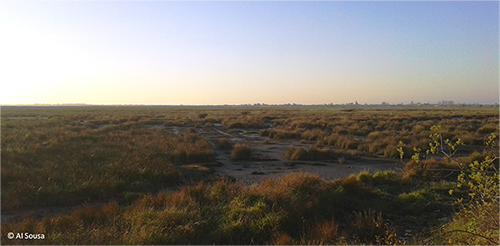 Salt marshes are amongst the most productive ecosystems in the world and provide important ecosystem services, namely regulation and maintenance of coastal areas. Acting as coastal filters, salt marshes also have important roles in carbon (C) storage, thus contributing to climate regulation at local and global levels.
Nevertheless, these habitats have been converted or degraded due to many drivers and pressures, and its sustainability and C storage capacity might be threatened by climate change effects. As a result of global climate change and sea level rise, Baixo Vouga Lagunar (BVL) salt marshes, included in Ria de Aveiro (Portugal), are likely to be affected and, consequently, the services they provide, namely C storage.
The main goals in this project are to analyse the BVL salt marshes phytosociological trend and to assess their C storage capacity, as an ecosystem service.
Participantes:
Ana Sousa, Ana Lillebø, Rosa Pinho, Olga Ameixa, Fernando LeãoLíder de projeto: Ana Maria Pissarra Coelho Gil
Líder de projeto: Ana Rita Moreira de Carvalho Maurício
Líder de projeto: Yves Noack
Co-líders de projeto: REIS Amélia
Disciplinas:
Eco-epidemiologieEcologie de la santeMedecineSante publiqueToxicologiePalavras chave:
ingestionenfantcontaminantbio-accessibilitégénotoxicitéResumo:
L'ingestion est une voie majeure d'exposition aux contaminants chez les enfants en bas-age. Le projet se propose de faire une étude des caractéristiques physico-chimiques, de la bio-accessibilité et de la génotoxicité des particules ingérées par les enfants en intérieur et en extérieur dans des environnements qu'ils fréquentent régulièrement (crèches, écoles maternelles, aires de jeux). Les sites de prélèvements seront choisis, sur les territoires des trois OHM BMP, Estarreja et Litmed, en fonction de leur environnent et exposition. L'importance de la spéciation des contaminants sur leur bio-accessibilité et ses conséquences sur la santé pourra être mise en évidence.